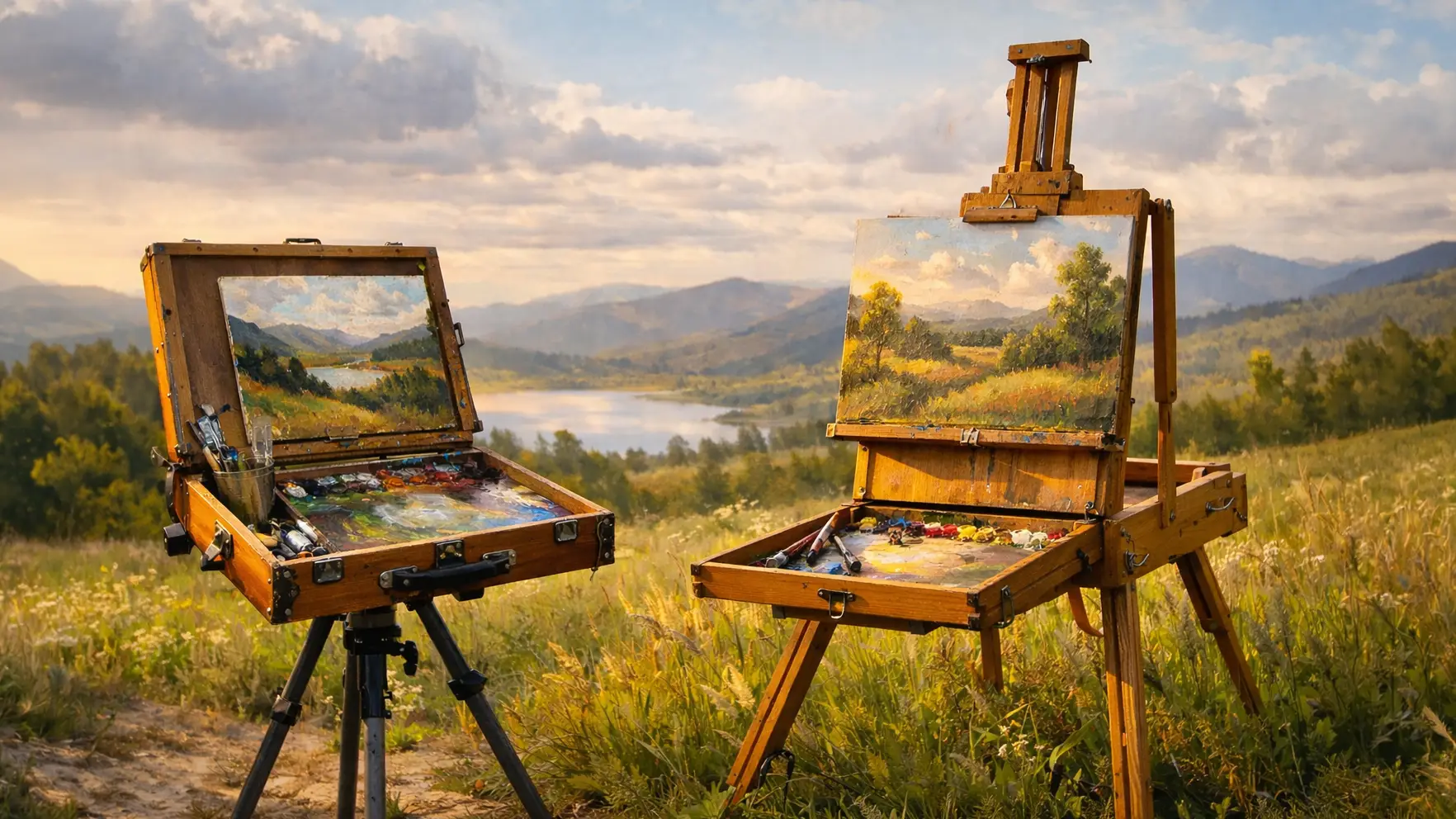
The Two Camps
Ask a room full of plein air painters which setup they prefer and you'll start a spirited debate. The French easel is a classic icon, beloved for its romance and self-contained design. The pochade box-and-tripod system is the modern standard, prized for its portability and efficiency. Both have passionate advocates — and for good reason.
The French Easel: Pros and Cons
The French easel (or 'box easel') is the image most people picture when they think of a plein air painter: a wooden cabinet on three legs, with drawers for supplies, a palette that slides out from the top, and a canvas rest built in. Everything in one package.
The appeal is obvious: it's genuinely self-contained. You can load it with everything you need and carry it to your painting spot without any additional bags. It has a romantic, classic aesthetic that many painters love.
But French easels have significant downsides. They're heavy — a quality wooden French easel loaded with supplies can weigh 15 pounds or more. Setup and breakdown is fiddly, with multiple wing nuts and adjustments. And the fixed palette position (directly below your canvas) makes it hard to step back and assess your work.
Many painters who start with French easels eventually migrate to pochade box systems. As one artist put it: 'I used my French easel for years. Now it sits in my studio as decoration.'
- Pros: Self-contained, classic aesthetic, holds large canvases, widely available
- Cons: Heavy (often 12–18 lbs loaded), fiddly setup, palette too close to canvas, not airline-friendly
The Pochade Box + Tripod: Pros and Cons
A pochade box is a compact box — usually wooden or aluminum — that combines your palette and panel holder. It attaches to any camera tripod via a standard mounting plate, putting your palette at a comfortable working height.
The advantages are substantial. A good pochade-and-tripod setup typically weighs 4–7 pounds — a fraction of a French easel. Setup takes under two minutes. The tripod is infinitely adjustable to uneven terrain. And because you can position your palette beside (rather than below) your canvas, it's much easier to step back and evaluate your work.
The main limitation is canvas size: most pochade boxes work best with panels up to 12x16 inches. If you love painting large outdoors, a pochade may not be the right primary setup.
- Pros: Lightweight (4–7 lbs), fast setup, adjustable height, fits in a backpack, airline-friendly
- Cons: Limited to smaller panel sizes, tripod sold separately, can feel less stable in high winds
💡 PRO TIP: Invest in a quality tripod with a ball head and quick-release plate. A cheap tripod is the most common source of frustration for pochade box painters — it wobbles, it's slow to adjust, and it can tip in the wind. A good carbon-fiber tripod lasts decades.
Which Should You Buy?
If you plan to paint primarily near your car, work at larger sizes, or value the classic all-in-one design: consider a French easel or a Gloucester-style field easel.
If you want to hike to painting locations, travel by plane to workshops, or simply want the most portable setup possible: a pochade box system is almost certainly the better choice.
For most beginners, we recommend starting with a mid-range pochade box. It will serve you well as your skills and painting habit develop, and you'll have a better sense of your specific needs before investing in more specialized gear.
Frequently Asked Questions
- Is a pochade box better than a French easel for beginners?
For most beginners, a pochade box is the better starting point. It’s lighter, faster to set up, and more adaptable to different painting locations, including hiking trails, travel, and plein air competitions.
A French easel’s self-contained design is appealing, but the extra weight and fiddly setup can discourage new painters from getting outside as often as they should.
The one exception is if you primarily paint large canvases (16x20 inches and up) and work close to your car. In that case, a French easel or field easel may serve you better from the start.
- How much does a good pochade box cost?
Quality pochade boxes range from around $90 at the budget end (Meeden, Jullian) to $350 or more for premium aluminum models like the Strada Easel.
For most beginners, the sweet spot is $140–$220. Models like the Guerrilla Painter 9x12 or Sienna Plein Air offer solid construction and a generous palette without the premium price tag.
Keep in mind that a tripod is sold separately. Budget an additional $40–$150 depending on the quality you want.
- Can I use a pochade box with any tripod?
Most pochade boxes mount via a standard 1/4"-20 or 3/8" threaded screw, the same fitting used by camera tripods worldwide, so they’re compatible with the vast majority of tripods on the market.
That said, not all tripods are equally well suited for painting. You want a ball head with a quick-release plate for fast setup and breakdown, legs that adjust independently for uneven terrain, and enough stability to hold your loaded pochade box without wobbling in a light breeze.
A dedicated photography tripod in the $80–$150 range is generally the sweet spot for plein air use.
- What size panels does a pochade box hold?
It depends on the specific box. Most standard pochade boxes accommodate panels from 5x7 inches up to 9x12 or 11x14 inches.
Larger models like the Alla Prima Yellowstone or Sienna 12x16 can hold panels up to 12x16 inches.
If you regularly paint at 16x20 inches or larger, a pochade box will feel limiting and you would be better served by a French easel or a dedicated field easel like the Gloucester.
Most plein air painters find that working small (9x12 or under) actually improves their paintings by encouraging simplification, so the size constraint is rarely the disadvantage it first appears.
- Can I bring a pochade box or French easel on a plane?
A pochade box is significantly more travel friendly than a French easel. Compact models like the Strada Easel or Guerrilla Painter 9x12 fit easily in a carry-on bag or backpack.
The main consideration when flying with painting gear is not the box itself but the solvents. Odorless mineral spirits, turpentine, and other flammable liquids are prohibited on commercial flights.
Most traveling painters ship their medium separately, use walnut oil (which is sometimes permitted in small quantities in checked luggage; always verify with your airline), or switch to water-soluble oils or acrylics for travel.
A French easel, by contrast, is far too large and heavy for carry-on travel and can add significant baggage fees when checked.
0 Comments